Feeds:
Posts
Comments

Posts Tagged ‘John Thomas Rogers’

Unless you have an ancestor who was abducted by aliens, pairing genealogy with Science Fiction could be tricky. Family history by definition occurs in the past and most Sci-Fi takes place in the future. I assure you, I am not aware of any of my forebears who had an alien encounter, yet I found a way to plug four of my great- great- etc. grandfathers into my soon to be published Freedom is a Distant Star.

Let’s back up. My first novel Trials by Fire is set in the present day, on a planet that has only plant life. The main character, Fern, is from Earth and is curious about the origin of humans on a planet with no other animal life. She is told they were brought here by Moses, who helped their ancestors escape from their alien abductors and colonize this world. A young man named Tiril, one of the few people on the planet who speaks English, translates the “Tale of Moses and Rila” into English for Fern’s benefit. One evening around the campfire, he recites the story.

Moses, an enslaved man in 1850s Virginia, escapes to Canada and freedom. Moses has latent paranormal abilities that sometimes help him get out of tight spots. While building a new life in Canada, he is abducted by aliens who enslave humans with psychic abilities. The “thortles,” as they are called, use psychics for interstellar communications, thoughts being faster than radio waves.

Although better treated than he’d been on the plantation, Moses resents being enslaved again and never ceases to look for a way to escape. Meanwhile, he falls in love with Rila and they have children. After many setbacks, they find a suitable unpopulated planet and travel there by “wrashiru” (psychic teleportation). Then, 100 years later, Fern arrives accidentally by wrashiru.

What began as a chapter of backstory refused to stay confined to the pages of Trials by Fire. The story of Moses and Rila grew in my mind until it demanded to be brought forth as its own novel. Last year, I entered the manuscript in the Royal Palm Literary Awards and it was judged Book of the Year (Unpublished). An unapologetic perfectionist, I’m now working on final edits and will publish it soon.

Back to the point of this post. On his way to Canada, Moses travels through parts of what is now West Virginia and Pennsylvania. I had ancestors in both places at the time of Moses’s escape. Why not use them as characters in the story?

The first people to help Moses are a Quaker couple, Evan Hiett and his wife. Evan Hiett was a popular name in Hampshire County, Virginia and more than one grace my lineage. Rather than choose one in particular, I fictionalized a character based loosely on history.

After sheltering Moses for a few days, Evan sends him to his cousin, John Hiett, in Middleway, in Jefferson County, now West Virginia.
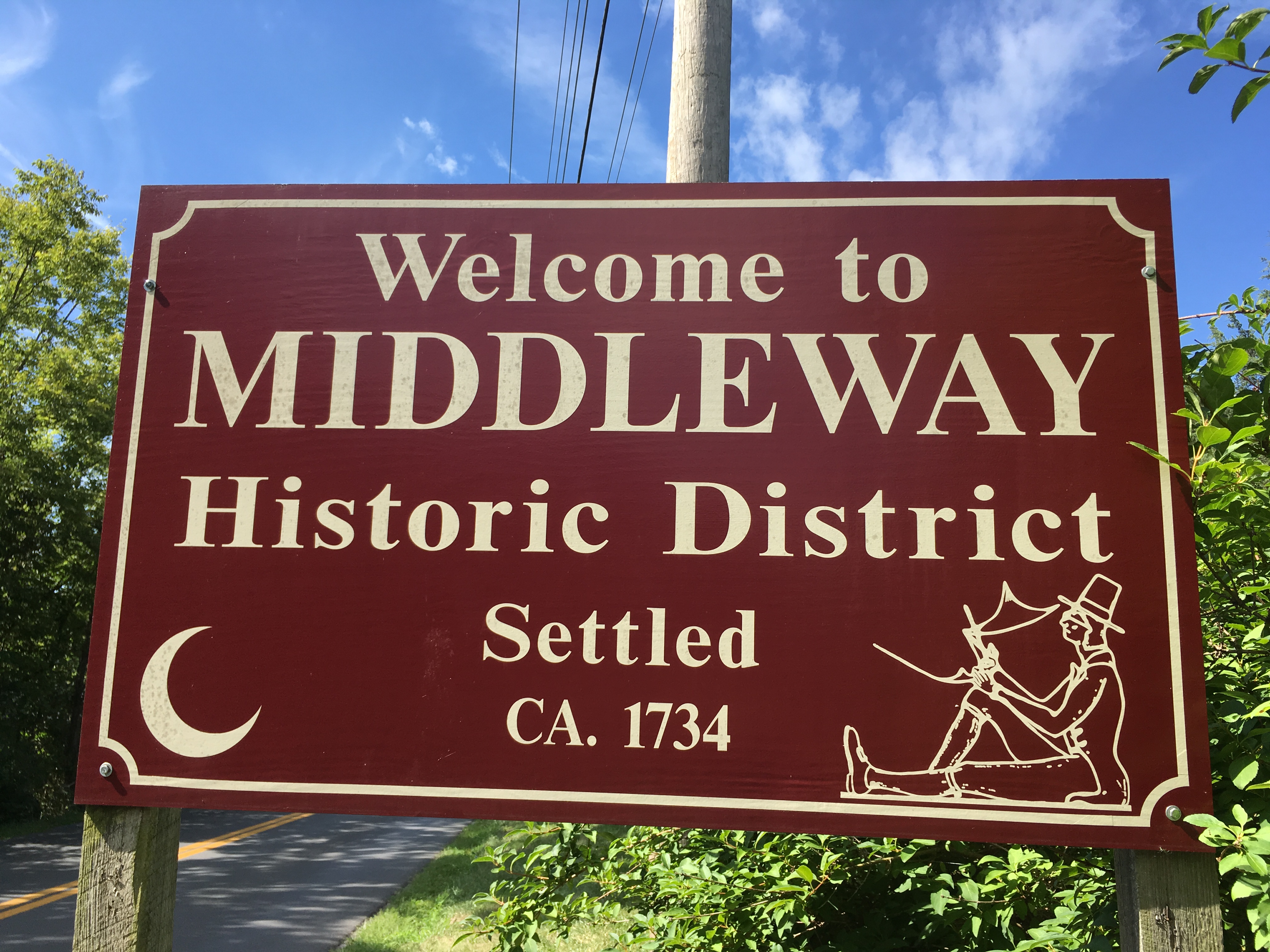
John Hiett was a real person. He had a farm on nearby Opequon Creek.

Opequon Creek

Several years ago, I visited Middleway.
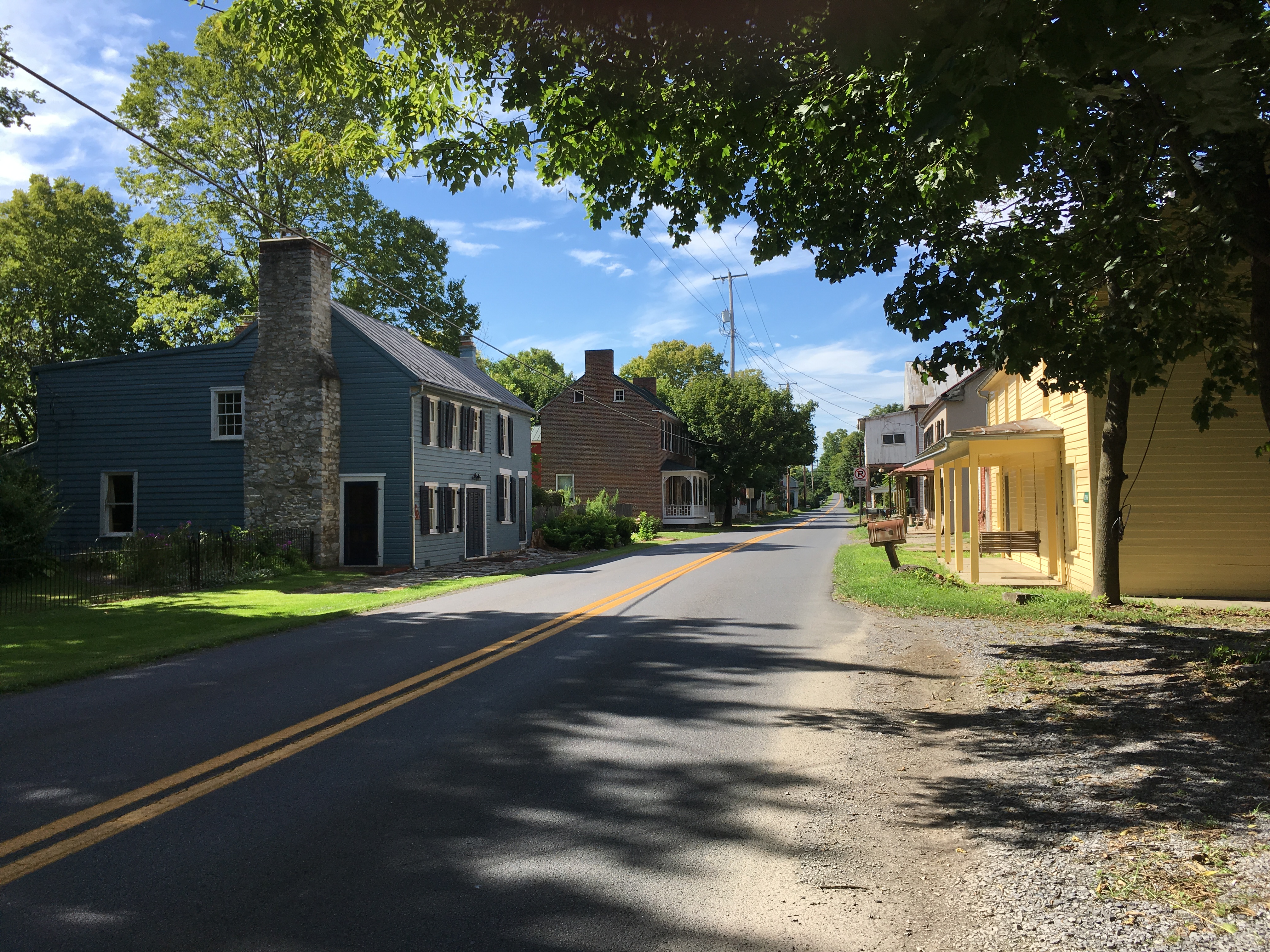
I didn’t find John’s farm, but I was enchanted by the quaint village that has changed so little over the past century and a half.

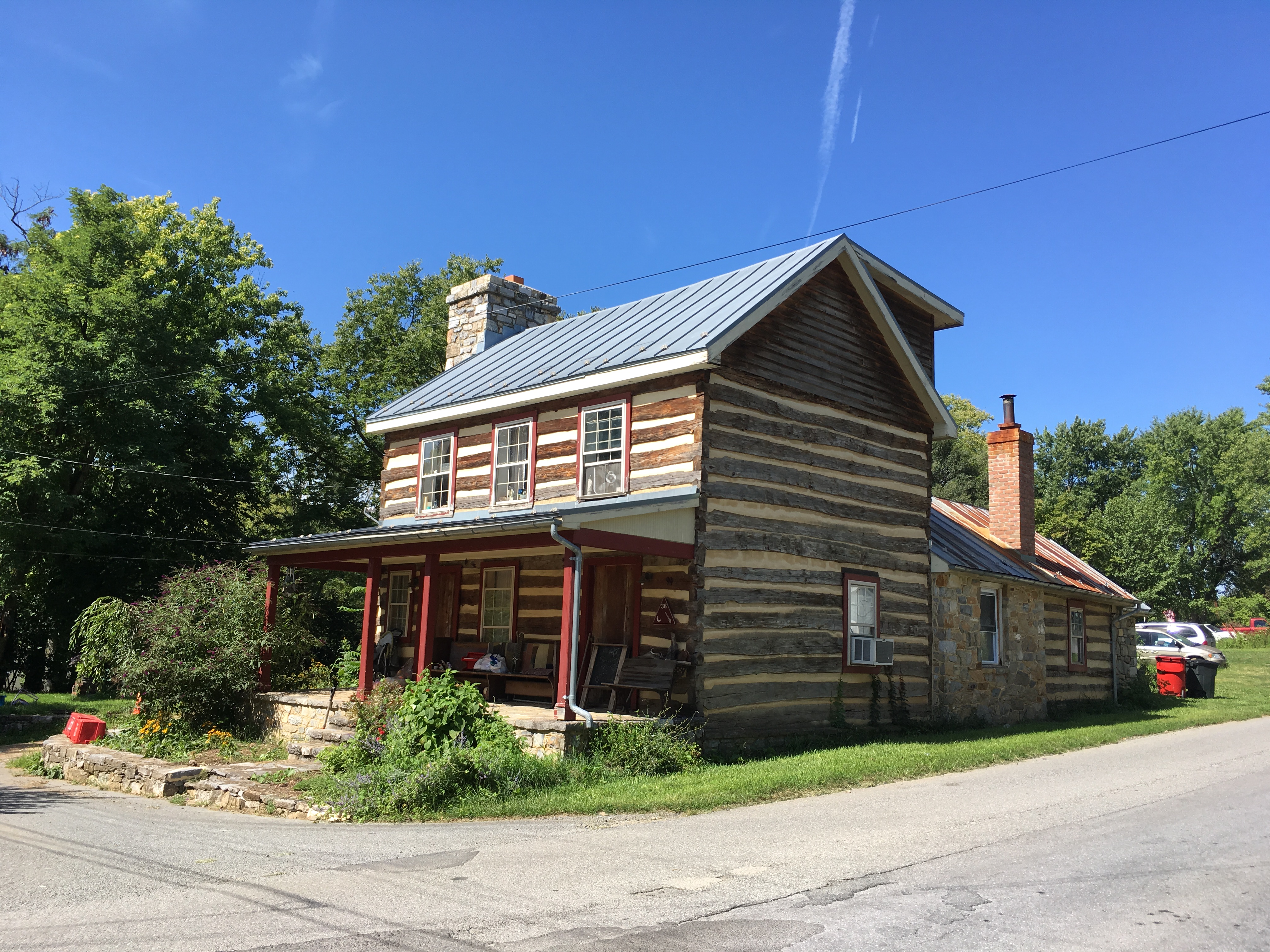
In the story, John takes Moses to Shepherdstown, near Harper’s Ferry, where members of the Underground Railroad send him on the next leg of his journey.

In Pennsylvania, Moses is befriended by the family of David and Eunice Perkins, who helps him get to western New York State where he could cross into Canada. David Perkins was actually David Rogers, but in the story I used Eunice’s maiden name, Perkins. David Rogers’s ancestors were actually slave owners in Connecticut in the 1700s. (We all have skeletons in our woodsheds.) Later, they saw the error of their ways and became abolitionists.

David was a quirky fellow, and I tried to bring his personality to life in the novel. His son William Lewis, my great-great grandfather, is a teenager in the story. William later served in the Civil War, homesteaded in Kansas, and eventually ended up in West Virginia. His son John Thomas, my great grandfather, married Rebecca McDonald, who was descended from the Hietts. That’s how I came to have roots in both WV and PA.

You, dear reader, are the first to know my secret. None of my advanced readers were aware of my relationship with the Hiett and “Perkins” characters, and no one has questioned their roles in the story. So the answer is yes, you can use family history in Science Fiction. I like to think that by using people with whom I have a connection, I could better breathe life into the characters. Besides, it was fun.

My ancestors are heroes in the story. If not for the Hietts, Moses may not have made it as far as the Potomac River. David “Perkins” didn’t just point Moses in the right direction, he took the time to drive him from Montrose, PA to Elmira, NY. Of course, there were others who helped him on his way to Canada. After he left Earth, however, I had to depend on purely fictional characters. To my knowledge, I have no relatives residing on other planets.

Read Full Post »

Here is a little window into the past, a window somewhat cracked and smudged and incomplete.

In August, 1946, about a month after burying his second wife, Grandad put an ad in the newspaper for a housekeeper. I don’t know the exact wording of the ad, but it must have gone something like this: “Housekeeper wanted, must not smoke or drink. Must be able to play piano.” Perhaps other qualifications included good looks and being able to drive a car.  A number of ladies answered the ad and Grandad saved their letters. Why? Did he regard them as love notes from admirers? Somehow these letters survived the years.

This portrait of Grandad was sketched by an itinerant artist during the Depression.

Grandad was 72 and in good health. He still worked his farm and chopped his own wood. He lived to be 97. But based on housekeeping skills I observed when I knew him, the place was probably a mess by the time he placed the ad.

All the envelopes were addressed to Box R-112, Binghamton Press. Was that common practice then or was Grandad being cautious, afraid of gold diggers? He was not a wealthy man, but he lived in a beautiful Victorian house complete with a seldom used parlor that contained a piano and had gingerbread trim in the gables.

What amazes me is that respectable ladies would put themselves in possible harm’s way, willing to go unaccompanied to the home of a man they knew nothing about. In those days, most women were homemakers and had few marketable skills. Once widowed, unless their husbands left them a comfortable sum, they were dependent on the generosity of relatives. The women who answered the ad were in their 40’s and 50’s, not old enough to collect Social Security. A position as a housekeeper would keep starvation at bay.

(Mrs.) Vina Capron of Brooklyn, Pa. wrote, “Dear Sir: I saw your ad in tonight’s Press for a housekeeper and I am writing to apply for the position. I am a widow, 50 years old. Can play a piano and sing.” She gave the location of her home and her phone number.

Mrs. A. Smith “Saw your ad in last night’s Press. I am a widow, neat, nice looking, play the piano and am a good cook. If interested, I’m at 37 Warren St. up stair apartment. I neither smoke nor drink and can drive a car.”

Mable Walker of Endicott, NY wrote, “I do not drink nor smoke. I play piano some. I also play second for a violin. Would like to know more about the job.” She gave her contact information. “I am a middle aged lady… P.S. I have done housework all my life. You can come here, better phone first.” Did she audition for Grandad on the violin? He was musically inclined. I don’t know if he played piano, but he played the fiddle.

Frances Erekson said, “I do not chew, smoke or drink. But I can play piano. I have since I was four years old… I have a son 19 over sea and a daughter 25… I am looking for a place, either rooms or something similar to your add. I am white and American…49 years of age.” Whether a room was part of the deal or not, I don’t know. Some of these women lived near enough to commute to the job, if they had a car.

Mrs. Lena Fleming’s stationery had a bouquet of flowers in the upper left corner. She wrote, “I am a widow forty-two years of age and don’t smoke or drink as I don’t approve of it. Am a member of the M.E. Church. Am fairly good looking and have a nice personality. Cannot play the piano but would be willing to learn.”

Letter from Lena Fleming

Blanche Page “read your add. It attracted my attention. No smoking or drinking. Maybe no drinking on your part.” (She sounds a little suspicious.) “I used to play the Piano, but haven’t had much time for it lately.” She gave her address and phone number but “If by chance you would like to talk things over, I could meet you at the Y.W.C.A… Due to conditions I hardly know what I want to do myself. I am a widow. Have a home… Can you drive a car? Well, I can if it will go. My troubles are when it won’t go.”

A lady who didn’t give her name wrote, “Although I do not pay piano except some by ear, I do not smoke, drink or swear. Am a refined widow and can cook and keep house. If you are at all interested and care to make an appointment for an interview, you may reach me by phoning any day after 3 P.M. Simply ask for the lady who answered your ad. At that time we can exchange names etc.”

These women had nice, clear handwriting. Not so Mrs. Nellie Bailey. Hers was difficult to decipher. “I now endeavor to write to you to see if you have a lady yet as I wish to get a place like yours… I have cooked in hospitals and I played organ in my church so I can play piano. I want a pleasant home and I can give best of references. I am not to loving and I can cook and I like to dress and I don’t drink or smoke. Some prefer loving girls. And now days they like to have a good time. And some don’t no how to cook or bake. Parents don’t to live right of late years.” Nellie was willing to go to his house to meet him and asked, “Have you a car?”

Despite her poor handwriting and grammar, she got the job. How did Grandad make his decision? Did he turn down the other women or were they deterred by his messy house? Was Nellie more “loving” than she advertised? When and why did their arrangement end? Grandad had a third marriage that ended in divorce. Later, Nellie showed up again as his housekeeper. They made a cute couple, sitting on the porch or walking down the road holding hands.


Read Full Post »

People just don’t understand fruitcake. This time of year, when the fruitcake jokes begin making the rounds, I cringe. Every summer when I drive through Claxton, Georgia, the “Fruitcake Capital of the World,” I shake my head in disgust. I’ve considered stopping and setting these well meaning but ill informed people straight. I hardly call those white bricks of sugar, filled with stomach-turning green and red things, fruitcake. I make fruitcake. Real fruitcake.

I got started after receiving an inheritance from my great-grandfather. Grandad made it to 97, outliving three wives and a series of “housekeepers.” He wasn’t quite as bad as Henry VIII. He didn’t behead his wives, but he worried the first two to death and divorced the third in a era when divorce was not quite respectable. It was also not respectable to live with a woman without the blessing of marriage, so Grandad had “housekeepers.”

Grandad was a handsome young man.

His wives were out of the picture by the time I entered the world, but I remember a few of the housekeepers. One had a daughter who had no arms. I remember visiting one day with my grandmother. The girl was washing dishes. I was too small to look into the sink and see just how she did it, but she stood on one leg, her other foot in the sink working in the sudsy water. She wore slip-on shoes so she could slide her feet out easily whenever she needed them for hands. I assume she went to a special school. Her mother told her to show Grandma the necklace her teacher had given her. The girl stood on one foot, lifted the other to her chest and held out the necklace, the same way you or I would with our hands.

Grandad’s house

Years later, Grandad had a housekeeper around his age named Nellie. She and Grandad would sit on the porch together or walk down the road hand in hand. Once Nellie asked me about my family and was amazed that none of our many children had died. When she was young, she said, it wasn’t unusual for a family to lose several children. She told me about a sister who had died. “I really liked that sister.”

Then we moved to Florida. I visited the summer after Grandad died. Aunt Ora Mae was sorting through his effects and gave me a few of his things. Among them was a stained and tattered notebook filled with antique recipes, one of which was Sarah’s Fruitcake.

I have no idea who Sarah was. Apparently she was an acquaintance of whomever kept the recipe book. When I showed the book to Grandma, she didn’t recognize the handwriting, but she was sure it wasn’t my great-grandmother Rebecca’s. She surmised it had belonged to one of Grandad’s subsequent wives or one of the “housekeepers.”

I’m not sure what the standards of kitchen measurement were in those days, but Sarah’s instructions included “coffee” cups of this and that as well as “teaspoons” and “tablespoons” which I’m sure only approximated modern measures. In addition to raisins and other dried fruit, Sarah used citrons. I’m willing to bet they were actual home-preserved citrons, not those plastic green and red things which are passed off as fruitcake ingredients today.

That November, I made my first fruitcakes, shared them with family, and sent some to my grandparents. I used standard measuring cups and spoons and lots of dried fruits, no “citrons.” It was delicious.

I’ve made fruitcake every year since. I’ve modified and improved Sarah’s original recipe, but I still give her credit for what she shared with the unknown woman in Grandad’s life. Here’s the recipe I use now:

  1. Mix together 6 to 8 cups of dried fruit. Suggestions: raisins, golden raisins, diced figs and prunes, cranberries, currants, diced dates and apples, cherries, and pineapple. (I use canned pineapple, drained, of course.) Add 1 to 2 cups of broken pecans.
  2. Mix together and add to the fruit:

2/3 cup butter

1 cup honey (you can use raw sugar)

½ cup sour cream

3 beaten eggs

  1. Combine and add:

3 ½ cups flour (preferably whole wheat)

1 teaspoon baking soda

1 teaspoon cinnamon

1 teaspoon orange peel

½ teaspoon salt

½ teaspoon nutmeg

½ teaspoon cloves

To incorporate all these dry ingredients into the fruit mixture will be a test of strength, but it’s worth the effort. If the dough is too dry, add a little more sour cream.

  1. Line baking pans with parchment or waxed paper and fill 2/3 full. You can dress up the cakes with a line of pecan halves down the middle. Bake at 275 degrees until a toothpick come out clean.

I use 4 or 5 small loaf pans (7 ½  x 3 ¾). The number of pans needed depends on the volume of fruit and nuts. Cooking time varies by the size of pans. Cakes in small loaf pans take a little over an hour.

Try it. You’ll like it. And maybe next Christmas season, like me, you’ll cringe at those unkind “fruitcake” jokes.

Read Full Post »

Writer Beware

Shining a small, bright light in a wilderness of writing scams

Abandoned Southeast

Preserving the Past | A Photoblog of Hundreds of Abandoned, Historic, and Forgotten Places

Bonnie T. Ogle

Award Winning Childrens Author

filmmaven

A great WordPress.com site

The Tony Burgess Blog

The Home Of T-Bird From The Dork Web.

Wells Family Genealogy

The study of my Family Tree

Alien Resort

A Terrestrial Romance

douglasfelton.wordpress.com/

Compelling Young Adult fiction from author Doug Felton

Hidden River Arts

Dedicated to Serving the Unserved Artist

Green Life Blue Water

Where Eco Meets Life

Pattie Remembers

Sunsets and Buzzards, and Other Stories

koolkosherkitchen

Welcome to my Kool Kosher Kitchen where food is fun and fun is to create food!

The Life in My Years

An anthology of life

cookingforthetimechallenged

Fast, easy, all natural, healthy, kosher cooking

CarpeDiemEire

Travel Through Ireland and Europe