Feeds:
Posts
Comments

Posts Tagged ‘Hurricanes’

In the 1960s, few people in Florida had air conditioning. I lived in a Cracker house with lots of windows which allowed cross breezes for cooling. In the early 1970s, I taught in schools which were not air conditioned. One wall in each classroom had large windows which could be opened. For a cross breeze, we would open the door on the opposite side of the room. Fortunately, school let out for the hottest months.

People who are addicted to air conditioning forget that our bodies are designed to manage temperature changes. When we’re too warm, we sweat. If there is a breeze, it evaporates the sweat, cooling the skin.

Besides strategically placed windows, how did we survive the heat? In those days, the climate was still our friend. A typical summer day saw the temperatures climb into the late afternoon. Then a thunderstorm would cool the air, giving us relief which lasted through the night. That’s how we survived without A/C.

In the 1980s, the weather pattern changed. One summer, instead of hot sunny days tempered by daily thunderstorms, nearly every day brought hazy skies. I was glad to have air-conditioning then. This pattern lasted for years. Only recently have we seen the return of afternoon storms.

Other things have changed, too. Country people used to predict the date of the first frost by when the dog fennel bloomed. I tracked this for years, noting the date of the first bloom and, counting forward six weeks, marking the anticipated frost date on my calendar. It was surprisingly accurate.
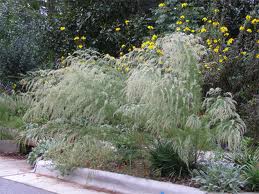
Dog Fennel in Bloom

One year, the first frost came, not in November, but later, in December or January, and it has been the same since. Dog fennel still blooms, but the weather no longer follows its lead. Frosts also come later in spring. Fruit trees bloom on schedule, only to be nipped by late freezes, which means a poor harvest, if any. This winter, a killing freeze hit at the end of January, with temperatures in the 20’s as far south as Orlando. Every gardener I know lost plants that usually do just fine in normal winters.  (I know, you non-Floridians think we’re sissies, but how well can you take the heat?)

Love bugs still appear twice a year, in May and September. At one time, I could set my calendar by them. When the first love bug splattered on my windshield, I knew it was either May 1st or September 1st. Now, they’re confused. A few will venture forth a week early, and occasionally I’ll spot one out of season.
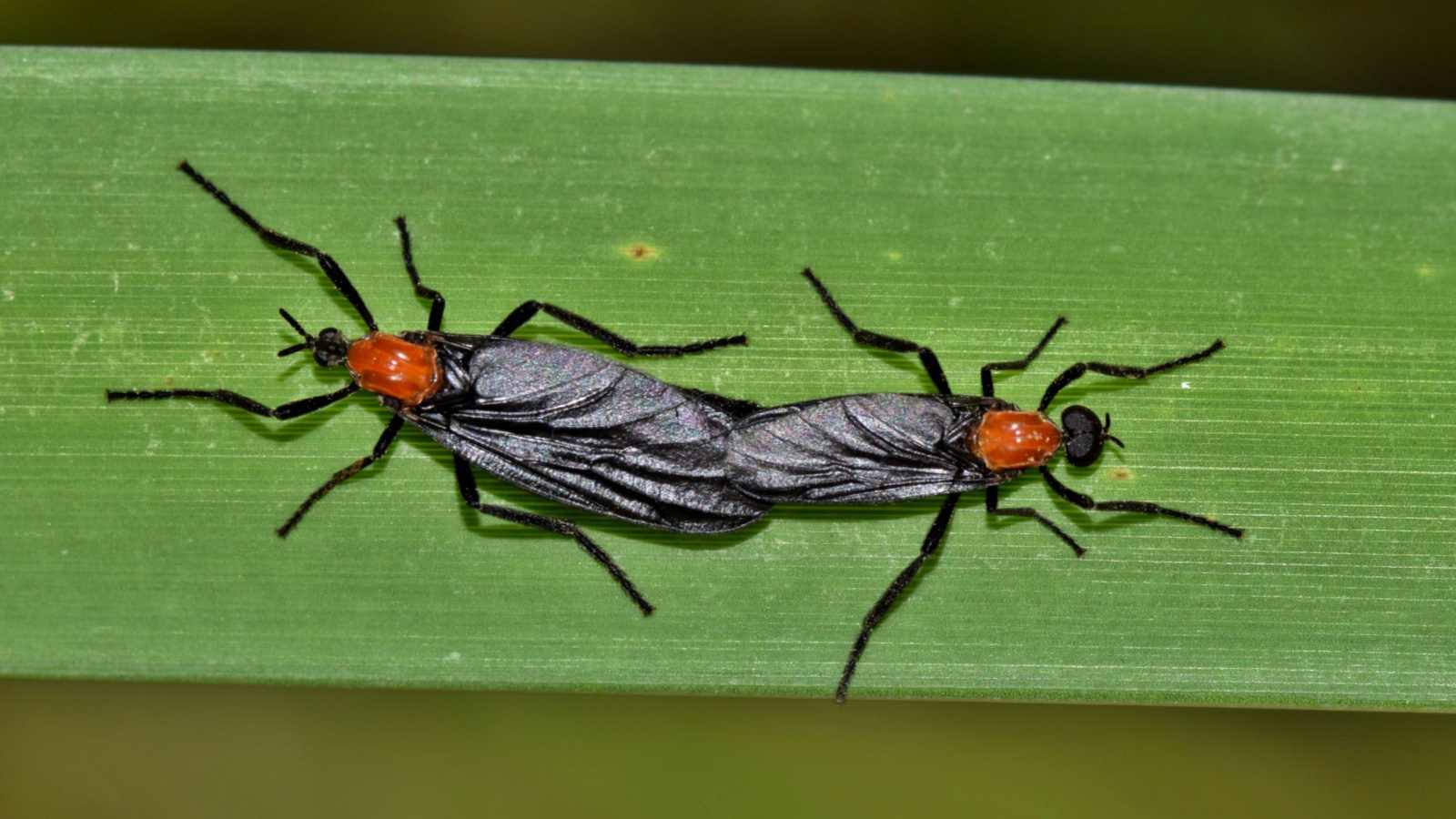
Love Bugs

These local observations are only a microcosm of worldwide disruptions. In a balanced nature, plants bloom or leaf out at a certain time, then insects hatch and feed on them, in turn providing sustenance for birds and other wildlife. When these schedules are interrupted, plant material and nectar are not available to insects and birds at the right time. This leads to the loss of, not only individual organisms, but entire species.
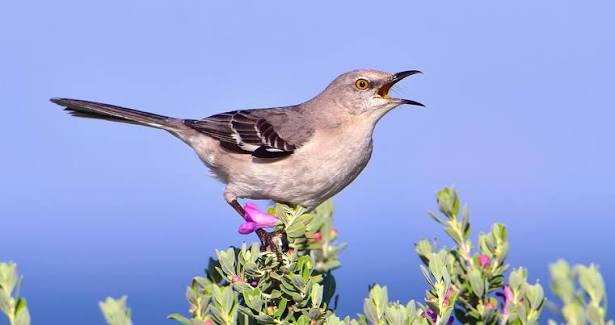
Mockingbird

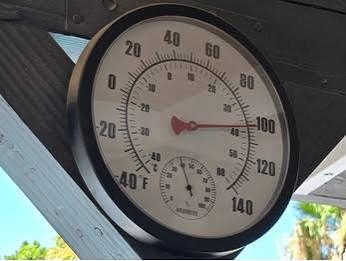
And what about the large organism we call Earth? This may be the hottest year ever, and I don’t mean hot as in popular or fashionable. I’m one of those people who like the heat. Give me 90o and 90% humidity, and I’m happy to be outdoors. But this summer, all too many days saw the thermometer on my back porch reading 100o. In the shade! Too hot even for me—I hibernated in my relatively cool house.
I won’t complain that the mosquitoes haven’t been bad this year, but I’m starting to worry. I noticed the dearth of insects a few weeks ago when the Great Southeast Pollinator Census came up. This is an annual citizen science project that tracks insect populations. You go out in your yard, choose a flower, and watch for fifteen minutes, tallying the insects that land on it. My first fifteen minutes, not one insect even came close to my zinnia! I tried again later and saw two butterflies. That’s all. No bees or anything else. Where were they? Other people reported seeing fewer insects than expected, too. Not a good sign.  

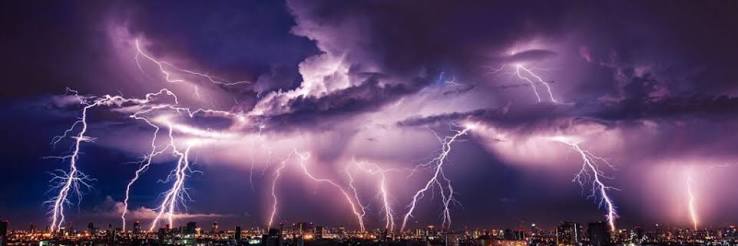
I’ve never seen so many lightning storms. I have a lightning tracker on my phone which alerts me when strikes are within a few miles. I pay attention for my own safety and that of my electronics. In the past, I’ve lost two modems and a laptop to lightning strikes, so I unplug everything when storms approach. This summer, clusters of storms swept across the peninsula nearly every afternoon and evening, leaving me without internet sometimes for five or six hours! Thunderstorms usually bring rain, but this summer, surrounded by thunder and lightning, many times I got a nary a sprinkle.
Floridians live with hurricanes. In June, we start hoarding supplies and watching the tropics. Those who live near the coast or in flood zones or mobile homes, if they are wise, will make evacuation plans. In a good year, we’ll get a tropical storm or two which brings much needed rain without devastating winds. This year, as of the end of September, we’ve had not one named storm. They fizzle out or spin off into the Atlantic, away from land.

The Pacific, however, has been hyperactive. Hawaii, which seldom gets hurricanes, has been battered. Even Mexico and California have been impacted by storms that usually track away from the coast. The blame is laid on El Niño. Every few years we experience El Niños, but this one has been unusually intense.

If we and the climate are no longer friends, whose fault is it? The climate is only trying to adapt to changes we caused. We should do all we can to help it find a new balance.

Read Full Post »

At first, they called it a novel coronavirus, but it mutated into a real-time dystopian novel.

At the turn of the year, Covid lurked in the sidelines, waiting to take center stage. Initially only a vague specter, it materialized from the shadows to become a source of ghoulish entertainment, dominating the airwaves. Can this be a replay of 1918? Surely not in this age of medical miracles! But the pundits could not hide their dread. Their knitted brows were enough to freeze my spine. Older ladies of my acquaintance, thinking they were prime victims, quarantined themselves. It was rumored this would become everyone’s fate, but surely that couldn’t happen, could it?

1918 Flu Epidemic

On Friday the 13th, the world changed. Schools closed. People stopped going to work. Panicked hordes stripped grocery shelves clean. Of toilet paper, no less. Meetings, travel plans, even weddings and funerals were cancelled. Life, once plotted out in calendar entries, became a fogged-up windshield in a vehicle out of control, hurtling at unknown speed to a nebulous future. That’s when I realized I was living inside a dystopian novel.

Stories and movies came to mind, of catastrophic events that spelled the end of the world: wars, alien invasions, plagues decimating the world’s population. In some stories, heroes emerged to save remnants of mankind, while in others the heroes were lucky to save themselves. Dystopian stories are great entertainment, but they’re no fun for their besieged characters. And now I was a character in one!

As a writer, it’s not such a bad place to be as long as my retirement checks keep coming, the electric grid holds up, and I can get groceries every week or so. If the electricity fails and I can’t get to the store, I’d still survive, as long as my cache of last year’s hurricane supplies held out. But, darn, I’d have to write on paper instead of my computer if the power went off.

Then I found out how much I depend on technology. One day, my phone stopped working. Good, no spam calls for a few days until a technician can fix it. I still had internet. A week later, the internet went out! I nearly panicked. I was a character in a movie, surrounded by unknown perils, cut off from the outside world. How could I survive without email, Google, and Wikipedia? Fortunately, the phone company had it fixed within hours.

The first week of quarantine was unsettling. The second, I settled into the unreality of it and watched the movie play out around me. But the surreal turned bizarre when the world began to morph into my dystopian novel.

My yet-to-be-published dystopian novel takes place in the future when solar power has replaced fossil fuels, but it didn’t happen soon enough. South Florida has gone the way of Atlantis and autocrats build houses that can withstand Category 7 hurricanes. Books aren’t banned, but they’re obsolete. My heroine collects books on history and studies them to uncover lost truths. When information is stored digitally, it’s easy to rewrite history.

The federal government is weak and ineffectual and the US has been partitioned into autonomous regions, each with its own set of laws. When a killer hurricane strikes, Georgia closes its border to keep Florida refugees out. Hospitals are out of supplies and the sick and injured crowd the hallways and cover the floors. The poor are hit hardest and rich see opportunities to enrich themselves. Until the pitchforks come out…


My novel is a fantasy, a series of events that (I sincerely hope) won’t come true. Or will they?

Coastal communities are already dealing with sea level rise. Hurricanes are becoming more powerful. (My fellow Floridians really dread the advent of this year’s hurricane season.)

As Covid went viral in New York and New Jersey, and hordes of Yankees headed south to escape, there were rumors that Florida was setting up roadblocks to keep them, and their contagion, out. Hospitals are over capacity and undersupplied. An economic bailout has the rich corporations making out like bandits while the rest of us are being thrown crumbs.

I wrote my book long before all this became reality, and I never expected to see it happen. Each development has made me pause and reflect. Just coincidence. I’m certainly no prophet.

Then a government official gave out erroneous information and the website he alluded to was later altered to agree with what he said! Rewriting history is not a new idea. Remember 1984?

Now several states, frustrated by the failed leadership of the federal government, are forming regional coalitions to make pacts on how to keep their citizens safe while restoring normalcy.

But not all is gloom and doom. In my book, the heroes encounter good people, many of them have-nots, who share what little they can. Even some of the well-to-do show their charitable sides.

In the current pandemic, people are stepping up to contribute what they can to those in need. Mom and Pop restaurants are feeding the hungry. Ladies with sewing machines are stitching up face masks. It’s refreshing to see that compassion and service survive in in our present dystopia, as well as the fictional ones.

I’ll tell you, though, if any more elements of my book come to pass, (if the pitchforks come out!) I may just have to rewrite it. Maybe as a cozy romance? What could be the harm in that?

Read Full Post »

Writer Beware

Shining a small, bright light in a wilderness of writing scams

Abandoned Southeast

Preserving the Past | A Photoblog of Hundreds of Abandoned, Historic, and Forgotten Places

Bonnie T. Ogle

Award Winning Childrens Author

filmmaven

A great WordPress.com site

The Tony Burgess Blog

The Home Of T-Bird From The Dork Web.

Wells Family Genealogy

The study of my Family Tree

Alien Resort

A Terrestrial Romance

douglasfelton.wordpress.com/

Compelling Young Adult fiction from author Doug Felton

Hidden River Arts

Dedicated to Serving the Unserved Artist

Green Life Blue Water

Where Eco Meets Life

Pattie Remembers

Sunsets and Buzzards, and Other Stories

koolkosherkitchen

Welcome to my Kool Kosher Kitchen where food is fun and fun is to create food!

The Life in My Years

An anthology of life

cookingforthetimechallenged

Fast, easy, all natural, healthy, kosher cooking

CarpeDiemEire

Travel Through Ireland and Europe