Feeds:
Posts
Comments

Archive for the ‘Marie’s Musings’ Category

News of a mass shooting in Arkansas alarmed me, since I have family in that state. When I learned that this occurred in Fordyce, I was relieved because I don’t have loved ones there, but my heart was heavy because I have been to that city and consider it to be a unique place.

Traveling between my son’s home in Mississippi and my mother’s in Blackfork, Arkansas, one route I’ve taken goes thorough Fordyce. Most recently, I drove through there this spring when I went out to watch the eclipse. On the surface, Fordyce appears to be an ordinary little town, but it has strong sense of civic pride and, most of all, a great sense of humor.

Three years ago, I noticed banners hanging from every lamppost in town. These banners featured—what?—redbugs? Chiggers? Really? Outside of town I saw large Redbugs painted on sheets of plywood, with captions proclaiming “Fordyce High School—2020 State Football Champions!” I spent a little time driving around town and even visited the football stadium. I took lots of pictures, but unfortunately, before I got home, my phone froze up and I lost them.

This is only one of the many flags.

Schools usually choose mascots with fierce-sounding names like Wildcats, Sharks, or Gators. Why would anyone name a mascot after a miniscule arachnid? Wouldn’t they be laughed off the playing field? This has got to be (It actually is!) the only school in the US with Redbugs as a mascot.

Fordyce Redbug

If you are unfamiliar with redbugs, let me educate you. Also called chiggers, they are relatives of ticks, so tiny as to be almost invisible. Their bites are the biggest thing about them. Actually, they don’t just bite. They inject enzymes into the wound they make in your skin. Those enzymes digest your cells. Yuk! They don’t suck blood, they suck up the digested tissue, and the bites ITCH!

Redbugs congregate on vegetation, on the ground, and just about anywhere, waiting for an unsuspecting victim to feed on. Notice I said congregate. They don’t come individually, like ticks, they come en masse. They crawl up your legs and get under your clothes. You may not notice them until you find welts wherever your clothes are constrictive. And they ITCH! The bites don’t just plague you for a few days, they ITCH for a week or more.   

They’re so small they’re nearly invisible.

I found a treatment for the bites that works for me. My late dog Teddy had skin problems and was very sensitive to flea bites. When I looked for something to relieve his suffering, I found that Echinacea will soothe insect bites. So I made a strong infusion of Echinacea to treat Teddy’s flea bites.

One day, I apparently tangled with a huge nest of chiggers in my yard. They crawled up under my shorts and covered my thighs with bites. I caught them early and reached for the Echinacea tea. Then I thought, why not do a scientific experiment to see how effective it is? I treated one side of my body with Echinacea and left the other side as the control. Overnight, that side of my body stopped itching. Having proved my hypothesis, I treated the other side. It stopped the itching, but not as well as on the first side. I concluded that the sooner you use Echinacea, the more effective it is.

The ITCH is even worse than it looks.

I learned the hard way to take my chigger treatment with me when I travel. Not far from Fordyce is a roadside park at Marks’ Mills Battlefield, the site of a civil war battle that has its own interesting story. I generally stop there to take a break from driving and stretch my legs. In 2019, I took two of my grandchildren to Arkansas with me and we stopped to tour the battlefield.

We tramped through the woods, read signage and monuments, and sat on wooden benches, oblivious that we were in enemy territory. Suddenly, James cried out, “There are spiders all over me!” I looked closely—he was covered with redbugs! I took him into the camper and had him take off his clothes and wash before putting on fresh clothing. I double bagged the infested clothes until I could tend to them. I checked myself and his sister for chiggers, but didn’t see any on us. At the moment. By the time we reached Blackfork, we both were ITCHING, but James was just fine. I rued the fact that I’d left my Echinacea at home. I tried other remedies, but nothing worked as well.

You won’t find a foe fiercer than a Redbug. Throughout history, their ITCH has caused more agony than attacks by Bulldogs, Stingrays, and Panthers. And the Fordyce Redbugs have defeated all those other teams with their ferocious-sounding mascots. The Bugs have won eight football championships between 1930 and 2020. No one laughs them off the playing field.

In many small southern towns, football is almost a religion. Fordyce was the site of Arkansas’s first football program at Clary Training School in 1904. Five years later, Fordyce High School had their own team. I’m sure someone knows what the first mascot was, but I haven’t been able to find out. In the 1920’s, they built a new football field. Workers clearing the land and building the stadium were tormented by redbugs. Perhaps tongue-in-cheek, the local sportswriter suggested making the Redbugs the team’s mascot. He was taken seriously, and the rest is history.

In 1927, the football coach noticed a six-foot-plus eighth grader walking by while the team was practicing. He called him over and asked if he wanted to play football. The boy admitted he didn’t know what a football was. The coach recruited him anyway, and Paul “Bear” Bryant played with the team when they won their first state championship in 1930.  

Birthplace of Bear Bryant

Coach Bryant came from humble beginnings, the eleventh of twelve children. His birthplace, an unassuming cracker house, still stands on Route 8 between Fordyce and Marks Mills Battlefield. He got his nickname after wrestling a carnival bear as a teenager. After he achieved legendary fame, Redbug Field was renamed Paul “Bear” Bryant Stadium. It was listed on the Arkansas Register of Historic Places in 2014.

This spring, I stopped for gas in Fordyce. The next time I pass through, I’ll spend more time and get to know the town better. Sadly, today most of the nation thinks of Fordyce as the scene of yet another tragedy, but there’s so much more to it. Any community with the aplomb to call themselves Redbugs must have what it takes to heal their sorrows and get back in the game.

Read Full Post »

As part of our genealogical research, my sister Sue and I visited old cemeteries looking for dead relatives. Often we’d find headstones of other people’s relatives engraved with a husband’s dates of birth and death, but only the birthdate of his wife. Where could the good woman be? Still alive? Are there scores of 150 year old widows still walking around out there? That nugget became the impetus of this story. Then I tossed in a character, Jefferson, who is out of his element.

“The Family Plot” was previously published in the 2023 Eckerd Review. Read and enjoy!

Jefferson suspected he was in the wrong grave. All he remembered of that last moment of his life was uproar, violence, and confusion. No pain. No time for that. Afterward, a soft, velvety darkness allowed him to sleep.

What happened at the time of death no longer mattered, but afterward, something had gone awry. Even before he heard all those white voices whispering around him, he knew he was not in the right place. A foggy perception lingered, of people crying, “Mama” and “Cheryl.” A male voice demanded, “What do you mean I can’t see her?” Another voice murmured a reply, but the only words he caught were, “Sorry, Mr. Blackthorne…burned beyond all recognition.” Who were all those people? It wasn’t important, as long as he could rest. The hazy voices faded. Hymns lulled Jefferson to sleep. He could have slept forever.

He could have slept forever, but a shrill voice harrumphed, “Well, I never! This just isn’t right. His kind doesn’t belong here.”

“Hush, Aunt Adelaide,” a mild one enjoined. “Times have changed. He has as much right to be here as anybody.”

“But this is ourah family plot! That space was reserved for one of ourah people. You heard what Cheryl’s husband said. He wants to be laid beside that grave when his time comes. Besides, the colored cemetery is…well, I’m not sure where it is. I never been to that part of town.”

Lord have mercy! Jefferson began to get an inkling of what had gone wrong, and it was terribly wrong. How could this have happened?

Aunt Adelaide harrumphed again.

Jefferson could take no more. “Now you hold on there just one minute. How do you think I feel about all this? I didn’t ask to be put here with all you crackers. I’m supposed to be in my family’s plot!”

“Well, of all the…”

“Hush!” insisted the niece. “There’s nothing any of us can do about it.”

Apparently, Aunt Adelaide couldn’t think of a comeback.

The niece continued, “Think about poor Cheryl. What happened to her? She must be buried somewhere else. They may have put her where he should be.”

If the dead could groan, that’s what Aunt Adelaide did. “To think that one of my blood is interred somewhere with all those coloreds! It is the Time of the Apocalypse! The End of the World is at hand!”

“Hush, Mother,” came a third voice. “You’ve been saying that for the last fifty years.”

Jefferson ignored Aunt Adelaide. If he’d been put here, where Cheryl was supposed to be, then where was Cheryl, whoever she was? If she were indeed trying to rest in his intended place, what were his own deceased relatives saying about her? If the dead could laugh, that’s what Jefferson did. But he felt tired. He wasted no more time worrying about Cheryl, or his relatives, or their problems. Nothing prevented him from sleeping now.

Except a moldy old voice which crept around his elbow. “Son, have you any news of my wife? Her name is Edith Owens.”

“No, sir. That name don’t sound familiar.”

“You see, she’s supposed to rest beside me when she dies. It says so on my headstone, ‘Edith Owens, Faithful Wife and Mother.’”

Still another voice intervened, “Grandpa Owens, you’ve been askin’ that of ev’rah soul what’s come here for the past ninety years. Nobody’s seen her.”

“But somebody’s got to of seen her. Maybe she’s in a nursing home. She’d be pretty old by now.”

“Yeah, try 160 years old, more or less. Grandpa, people just don’t live that long. She’s buried somewhere else.”

“Oh, no. Her place is here, beside me. Her name is on my headstone.”

“And on somebody else’s, too,” proclaimed a male voice. “Maybe more than one. She was on her third husband when I came here.”

“But that doesn’t matter. I was her first. She’s supposed to come here when she passes. Nobody’s told me she died.”

Another voice spoke with annoyance, “You should be asking somewhere else if you want to know where she ended up. Her descendants are scattered all over the country.”

“Well, I believe she’s still alive. And I’ll wait for her here, until she comes. If it takes forever,” Grandpa’s voice grew sleepy. With an added, “I’ll just wait,” it faded away.

Yes, it will be forever, Jefferson thought. And you’ll wait, all right. You’re not about to go anywhere. Neither am I, it seems. Another thought troubled him—who would someday be laid beside him? Cheryl’s husband? A white man? If the dead could shudder, that’s what Jefferson did.

They left him alone for a while. Jefferson slept. How long? Time meant nothing. Do the dead dream? He thought they were digging him up. Finally! They’d discovered their mistake! No, it was only a minor disturbance. Then it went away.

There followed a period of peace and quiet. Then pandemonium struck again. Do the dead have nightmares? The ground rumbled and heaved. What—an earthquake? Aunt Adelaide’s Apocalypse? No, it was only a backhoe digging a new grave nearby. Once the turmoil subsided, Jefferson heard Aunt Adelaide go through the litany of generations to figure out where the new inhabitant fit in. It was one Amy Blackthorne, Cheryl’s daughter.

Amy’s deceased clan remained respectfully silent until she had time to orient herself. The first person she spoke to was Jefferson. “Mama?”

“No, she ain’t here.”

“What do you mean she ain’t here? She’s supposed to be! Daddy told me they buried her in the family plot. Unless—oh, no! I hope they didn’t put me someplace else!”

“No,” Aunt Adelaide huffed. “You’re in the right place. They put your mama in the wrong place.”

“No they didn’t. Daddy showed me pictures of the grave. I gave him fifty dollars to buy flowers for me. He put them on the grave after they put the headstone there. He took a picture of it and showed it to me. Mama’s name was on it.”

So that’s what interrupted Jefferson’s rest, when they set the headstone. What was written on that headstone? Cheryl Blackthorne’s name? Why didn’t Amy go to her mother’s funeral? And why hadn’t she put the flowers on the grave herself? What kind of ungrateful child was she?

“Excuse me,” he asked, “why didn’t you go to your mama’s funeral?”

“Who are you?”

“I am Jefferson Lincoln Jones.”

“What are you doing here?”

“That’s what I’d like to know myself.”

“What have you done with my mama?”

“I ain’t done nuthin’ with yore mama. I suspect she’s in my family’s plot. With my name on her tombstone.”

“Oh, God! No!” If the dead could cry, that’s what Amy did. “How could this happen?”

Aunt Adelaide’s niece spoke up, “We were hoping you could tell us. What funeral home did you use? Maybe they switched caskets.”

That was too much for Jefferson. “We have our own funeral home, thank you very much. My uncle runs it. And he don’t switch caskets.”

The niece resumed, “Amy, didn’t you view your mother’s body?”

“No. I couldn’t go to the funeral. I was in the hospital.”

“What about your daddy? And the rest of the family?”

“They wouldn’t let them see her. They said she’d been burnt to a crisp.”

“How on earth did she die?”

“The fireworks store blew up.”

Now Jefferson remembered. The Fourth of July. His family had dispatched him to buy fireworks for their celebration. He was standing in line with his purchases. The woman ahead of him stepped up to the register and put her purse on the counter. He took out his wallet. And that was it.

“Amy, how did they identify the body?”

“They said they found her purse.”

How did he end up with a woman’s purse? And what became of his wallet? Couldn’t those idiots at the morgue tell the difference between a white woman and a black man? Even if they were “burnt to a crisp?” What about DNA? What about all that science stuff they show on TV? Oh, yeah. This county was still in the Dark Ages. Well, they always check dental records, don’t they? Then Jefferson remembered he’d never gone to a dentist.

Someone asked Amy, “How did you die?”

“I was at the store, too. I was outside in the car, waiting for Mama. I got hurt pretty bad. They took me to the hospital in a helicopter. I was in a lot of pain. For six months. Then I came here.”

The moldy old voice woke. “Have you any news of my wife? Edith Owens?”

“Who is she?”

Aunt Adelaide informed Amy, “She’d be your great-great-grandmother. That old fool thinks she’s still alive because she hasn’t been buried beside him.”

“No, I never heard of her.”

If the dead could gasp, that’s what Grandpa Owens did. “Never heard of her?”

“That’s enough, Rufus,” Aunt Adelaide said. “These young people are not taught anything about their pedigrees.”

“Pedigree, schmedigree,” sneered the male voice. “Aunt Adelaide, you won’t even acknowledge your own pedigree.”

“What do you mean?” Amy asked.

“Adelaide’s grandmother was half Cherokee. She won’t admit she ain’t pure white herself.”

If Jefferson could have chuckled, that’s what he did. “Well, maybe we’re related after all. I got Cherokee in my blood, too.”

The male voice added, “And someday, Jefferson won’t be the only black person in this plot. Amy, isn’t your cousin married to a black man?”

“That’s right. And they have children, too.”

If the dead could sniff, that’s what Aunt Adelaide did.

Once everyone in the family plot accepted the fact that Jefferson was stuck here, and Cheryl somewhere else, for all eternity, death went on. Aunt Adelaide stopped fussing, and Jefferson finally got his longed-for rest.

All in all, death could be interesting. Jefferson didn’t sleep all the time. Sometimes his neighbors sang songs and he joined them. The old and the young exchanged their stories. They even requested that Jefferson tell his. One day someone asked, “I wonder what people do in those little family graveyards that are all filled up and they never bury anybody new?”

“They probably get more rest than we do here,” someone else grumbled.

“I bet it gets boring,” another surmised. “But I worry about those people who get cremated and they scatter the ashes. What comfort do they get?”

That answer came one day when an ash blew in and settled into the soil. “Where am I?”

Someone told her and asked, “What are you doing here?”

“My ashes were supposed to be scattered on the family farm, but a gust of wind came up and I got blown all over.”

They questioned her about her death and what was going on in the world. Jefferson wished he could get news of his family. This discussion prompted exchanges between the ash and other parts of herself that had settled in diverse places, including Jefferson’s family’s cemetery. Jefferson sent a message to his deceased relatives, and to Amy’s consolation, the ash brought word from Cheryl. By now she was getting along quite well with her neighbors. But the ash had no news for Grandpa Owens.

Inevitably, the day came when a dark-skinned child joined them, and to Jefferson’s surprise, it was Aunt Adelaide who comforted the baby and dispelled his confusion.

Finally came a disturbance that Jefferson knew had to be the end of the world. Not only did the ground rumble and shake, but the coffin around him threatened to come apart.

It was not the Apocalypse, after all. As it turned out, the grave beside him was being dug. Soon, Cheryl’s husband lay beside Jefferson, who braced himself for the inevitable shock, confusion, and diatribe when the man learned that Jefferson was not his wife.

But before the poor soul had time to say anything, Grandpa Owens, shaken from his mold by the disturbance, inquired, “Son, what news have you of my wife?”

Read Full Post »

Six years ago, I experienced my first solar eclipse. How did I manage to live my entire life without previously watching one? I was always in the wrong place at the right time, or the weather was non-cooperative. When I was a kid, an eclipse was predicted where I lived. Lacking proper eye protection, I followed instructions to make a cardboard pinhole camera, despite doubts it would really work. I didn’t get a chance to find out. It rained all day.

In 2017, a total eclipse was to pass through South Carolina, a mere 300 miles from home. I was determined to catch this one. Not only was I successful, I was hooked. You can read about it here. After this, I began tracking eclipses around the world, envying people who are able to fly to exotic places to view them. The next total eclipse will be in Arkansas on April 8, 2024. I plan to be there.

In the meantime, I caught several lunar eclipses from the comfort of my front yard. I wrote about one last year. You can read that post here.

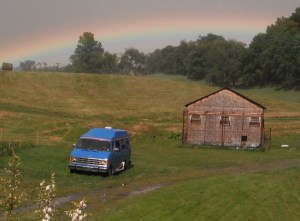
Recently, I learned about an annular eclipse going through Texas on 10/14/23. Not a total eclipse, these are called “ring of fire” because the moon doesn’t totally occlude the sun. I wanted to go, but it had been a busy spring and summer. Besides, I was without a dependable traveling vehicle. I’d had to retire my loyal blue Roadtrek after it had racked up a half-million miles and increasingly frequent repairs. Not all was lost, however. The partial eclipse was to be visible for hundreds of miles on each side of its path. I dug out my eclipse glasses and stayed home.

So long, old friend.

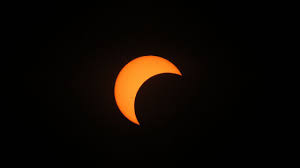
I swear, the weather must check the eclipse schedule before making up its mind about what to throw at us. The forecast was for clear weather. It was foggy overnight. The fog lifted, but clouds persisted as time approached the 11:50 a.m. start of the eclipse. Finally, the sun came out, but puffy clouds kept scudding across the sky. Between scuds, I caught glimpses of the moon edging into the left side of the sun. Through eclipse glasses, the sun looked like a yellow cookie that a celestial Cookie Monster had bitten into. CM kept nibbling until the sun looked like a fat C. I could see the dark disk of the moon. Not quite as spectacular as a total eclipse, it was still an awesome sight.

Instead of the moon continuing across the sun, the bite mark slid downward. I’ve seen this during partial lunar eclipses. Eventually, the fat C was resting on its tips. Maximum eclipse was at 1:22 p.m. The bite crept up the left side of the cookie, to make a reverse C. Then Cookie Monster began to slowly regurgitate, taking increasingly smaller bites out of the cookie, before moving on.

About the cardboard pinhole device, a few Facebook friends said they used them and got a good image of the eclipse. One even posted a photo he’d taken of it.

Readers may notice I haven’t been posting as often as I once did. I stay busy with other endeavors, including novels and short stories. Two of my stories have received Honorable Mentions in Writers of the Future. “Family Plot” has been published in the 2023 Eckerd Review. I will post the story on this website when I get a chance. “The Legend of Mellington Swamp” is a finalist for the Royal Palm Literary Award. Keep your fingers crossed for me. Season of the Dove is a finalist for a BookFest Award. You can read Notebooks Hidden in an Abandoned House on Kindle Vella. I hope to have it in book form by January. And I’m working on a prequel of Trials by Fire.

Whew! No wonder I get tired. Meanwhile, I need to shop for a new camper van, then Arkansas April 2024 or bust!

Read Full Post »

I love old houses. Recently, I spent a few days in Columbus, Georgia with my granddaughter and her family. Her husband was graduating from Cavalry training at Ft. Moore, but that’s another story. We stayed in a refurbished shotgun house in the historical section of town. You’ll find these cottages scattered about the South, usually in traditionally poor neighborhoods. Many have been destroyed and replaced with more modern dwellings, but lately people have come to appreciate their history and charm.

Shotgun Houses

Shotgun houses are long and narrow, one room wide, each room built behind another. It is said that if you open both doors and fire a shotgun through the front door, the shot would exit the back door without hitting anything. They were built for the climate, windows in every room and high ceilings. This was the first time I’d been in a shotgun house and I was impressed by the efficiency of it. That, too is another story.

On my way to Columbus, the highway was under construction all the way from Moultrie to Albany—45 mph all the way! Wanting to avoid that stretch of highway on my return home, I chose a route to avoid Albany. However, my GPS kept trying to put me on a “faster route” through Albany. Whenever I heard, “There is a faster route…” and not being able to punch buttons while keeping my eyes on the road, I had to stop and argue with my phone.

We finally settled onto Rt. 37, a pleasant drive through rural southwest Georgia, little traffic, nice scenery, and no construction zones. I passed occasional points of interest but didn’t stop. I wanted to get home before dark.

Then I saw it—a magnificent ruin beside the road. It was too amazing to ignore. I turned around and went back for a second look. Pulling off onto the side of the road, I peered out my window. My eyes hardly registered the boarded-up windows, unpainted siding, and broken porches. What I saw standing before me was the two story façade of a once-grand Southern Gothic mansion, columns with Doric capitals, trimmed gables, decorative animals standing watch from the rooftop.

The yard was papered with “No Trespassing” signs, suggesting that the owners meant business. I cautiously exited my vehicle. How I wanted to get closer, to walk around the house, perhaps peek through windows! But something held me back, as though the ghost of an angry woman, armed with a rifle, warned me not approach. I noticed a mailbox in front of the mobile home next door and was tempted to ask the inhabitants about the house, but something told me not to bother them.

Note the tarp-covered column on the lower right.

I had to be content to admire it from the roadside. Such a shame to let something once so beautiful fade into forgotten history. One of the columns was missing, a tall pole supporting the portico. In front of the house, off to the side, was a stack of lumber. Nearby, a rounded form was covered by a tarp—the missing column! I was happy to see evidence that someone was attempting to restore the house. After filling my eyes and imagination, I snapped a few pictures and went on my way.

How could I find out more about this place? Where was I anyway? I’d noticed a sign saying Elmodel, but what kind of name is that? My roadmap (yes, roadmap because I can’t always depend on GPS) didn’t even show a town, only Elmodel WMA (Wildlife Management Area). Roadmaps not being what they once were, I stuck the name into my brain until I could get home and research it.

My route took me through Madison, Florida, a proud antique town. The historic district boasts many beautiful old houses gleaming with fresh white paint, but none compared to what I imagined this yet-to-be identified home would have looked like in its prime.

When I googled Elmodel, Georgia, the first image I saw was my beautiful ruin! And I was not the only admirer. The McRainey house is featured on at least three blogs, a Facebook page, and other sites. There are comments by travelers like me and local residents, many who have fond memories of the house and its inhabitants.

McRainey House in its prime

Not as old as I first thought, the mansion was built in 1909 by Malcolm Archibald McRainey, who had made his fortune in timber, turpentine, and lumber. His home was the first in the county to have running water, electricity, and indoor toilets. Unfortunately, he had only five years to enjoy his lovely residence before he died, leaving two sons. One, Malcolm Angus McRainey, married twice. His second wife, Effie Holt, outlived him and was given a lifetime estate, allowing her to occupy the house until her death. After this, ownership was to revert to the children of his first marriage.

After she was widowed, Mrs. Effie remarried. When the house became too much for them to manage, she and her second husband moved into a trailer next door. In their absence, the house was looted and vandalized. This broke Mrs. Effie’s heart and she lost trust in anyone that came near her property. She was known to pull a gun on those, like me, who stopped to look. Strangers were warned, “If you have any notion of trespassing here, don’t be surprised if you’re met with a hail of gunfire.”

My sixth sense had proved accurate, if not timely. Mrs. Effie died in 2017. Today, only her spirit guards the place. However, if and when I return, I will heed the No Trespassing warnings, just in case.

In 2018, Hurricane Michael’s 100 mile per hour winds blew down two of the columns and some of the roofing, but the building survived, a testament to its sturdy construction. The property remains in the hands of the McRainey family who are optimistic about renovating it, although it will take time and a considerable amount of money. I hope to go back one day to see this battered treasure restored to its former grandeur.

For further exploration, visit

Abandoned Southeast

Southwest Georgia in Photographs

Vanishing Georgia

https://www.facebook.com/mcraineyhouse/

Read Full Post »

There was a lunar eclipse the other night, or rather, very early in the morning, about 3 a.m. I didn’t wake up for this one, because I had heard, incorrectly, that it was to be merely a partial eclipse. Only after I missed it did I learn it had been a total. Oh, well. I’d stayed up for another total lunar eclipse just a few months ago.

That was Sunday night, May 15th. It had been raining off and on and the weather forecast called for cloudy skies and a chance for more rain. I prayed for the weather to clear. We needed rain, but couldn’t it let up for just a few hours? I wanted very much to watch this eclipse. It was to be a dress rehearsal for one that is to occur June 8, 2123. Yes, I said 2123, 101 years from now. Why, you might ask, would I be interested in an eclipse more than a century from now? Surely, I don’t intend to live that long, do I?

No, I’m not likely to live another hundred years, but I hope my novels will.

Season of the Dove takes place in 2123. For a story to be interesting, the lives of the characters must be thrown into chaos. This happens when a Category 6 hurricane devastates North Florida, where I live. To date, the worst hurricane I’ve weathered was a Cat 2, and that was enough for me. The largest storm is rated Category 5, but in the next 100 years they’ll probably have to add additional categories. In this fictional future, the worst is Cat 7.

In the book, after things settle down a bit (Or do they?), I wanted a second crisis, a turning point for the novel. After I witnessed the Solar Eclipse of 2017, I thought a solar eclipse would be just the thing. I searched the internet, but unfortunately none were predicted in the US in the time frame of my story, even if I adjusted it by a year or two.

How about a lunar eclipse? Good news! A total eclipse of the moon is predicted to occur on the night of June 8th and 9th, 2123. Perfect timing. My heroes will be in the mountains of North Georgia at this time. Will it be visible in their part of the world? Yes! The eclipse will be visible over the entire eastern US, including Georgia. It’s predicted that the moon will turn orange or red during the eclipse, a phenomenon known as “blood moon.”

Blood Moon in 2021

In the story, the eclipse starts late at night and is at maximum around midnight. I wrote clear weather into the story so my characters could experience the entire spectacle. In this dystopian future, my heroes are reasonably intelligent people, but US civilization has degraded to the point that the masses are poorly educated and superstitious. When the moon turns red, spectators become anxious, fearing it to be some kind of omen. To complicate matters, I threw in a minor earthquake at the moment of maximum eclipse, just a little one, enough to be felt, enough to knock a drunken man off his feet and cause panic among the gullible.

If my novel survives into the 22nd Century when this eclipse occurs, what will my readers think? That I’m some kind of prophet? Or will they realize I had access to the internet and the calculations of astronomers? It would be fun to stick around and find out.

The Appalachians are not widely known as an earthquake zone, but they do have small quakes, more often than you’d think. I haven’t personally experienced one, but two of my family members have, and I used their accounts of the experience in the story. Earthquakes not being as predictable as hurricanes, I’m not aware of any foretold for the year 2123. If that were to happen, especially at the same time as a lunar eclipse, well, that would be just a little too weird.

Back to the present. The May, 2022 eclipse was predicted to occur at the same time of night as the one in June of 2123, with the same coloration of the moon. I wanted to see it for myself. I didn’t spend the entire night outdoors—the mosquitoes would have eaten me alive. I know, you can view these online, but I prefer to watch them in person. I peeked out every few minutes to see how the eclipse was developing.

At 10:30, the brightness of the full moon began to diminish. By 11:00, the shadow of the Earth fell over half the moon, making it look like a fat, silver crescent. At 11:30—Oh No!—clouds covered the sky and I couldn’t even find the moon. Fifteen minutes later, the sky cleared enough that I could see a small orange disk in the southern sky, about 30 degrees above the horizon. Over the next hour, I watched light play along the lower side of the orange ball, from the right side to the left as the eclipse progressed.

At 1:00 in the morning, a beautiful silver crescent appeared on the lower left side and grew larger as the Earth’s shadow passed. The moon again brightened the night, and I retired for some well-earned sleep, satisfied that my description of the 2123 eclipse was accurate enough.

I’m not going to give away more of the story right now, but Season of the Dove is available on Amazon and Kindle Vella. You can read an excerpt of it in either location.

Check out my other books on Amazon, the award-winning Trials by Fire and it’s sequel Quest for Namai. 

Read Full Post »

I originally posted this two years ago, to spread the word about a simple preventive for COVID. At the time, I didn’t imagine the pandemic would drag on this long. Not only has it persisted, we are now experiencing yet another resurgence. Every week I hear of a friend or relative who is suffering from COVID, some for the second time. As if that coronavirus isn’t enough, now we have the threat of Monkey Pox. I decided it was time to bring this easy remedy to people’s attention again.

Iced Pine Tea with Mint

For two years, I have been drinking pine tea daily and (knock on wood) I’ve remained healthy. Of course, I follow the usual precautions. I’m vaccinated and boosted, avoid crowds when possible, and mask-up. Perhaps I would have dodged infection even without pine tea, but I’m not willing to sacrifice myself for science by intentionally exposing myself to the virus.

Here is a modified version of my original post:

Sometime, in the long-forgotten days before COVID, I watched a webinar on herbal remedies and took notes. Four months into the lockdown, I came across this in my notebook: “During the Spanish Flu, those who ate pine needles didn’t get sick.”

What?

Why isn’t this common knowledge?

The webinar had touted the benefits of various parts of the pine tree. Pine needles contain more Vitamin C than oranges. For centuries, Native Americans have used pine to treat scurvy. During the 1918 pandemic, someone noticed that these scurvy patients didn’t get the flu.

A few years ago, at a Garden Club event, I bought a cookbook titled I Eat Weeds by Priscilla G. Bowers. One of my favorite recipes is Pine Needle Tea. You can drink it hot or iced. Its mild flavor is delicious. I take it to pot luck luncheons where it’s always a hit, but I didn’t know it could protect you from the flu.

I Googled “pine needles/Spanish flu” hoping to find more information. At the time, I didn’t find anything related to the 1918 pandemic, but I did find information on pine in regards to modern influenzas.

In addition to vitamins C and A, pine is rich in shikimic acid, an ingredient in Tamiflu. This ingredient is imported from China where it’s extracted from the star anise tree, but we grow our own source of shikimic acid right here in the US. You may have it growing in your own backyard!

I found newspaper articles from Maine and Pennsylvania which discussed how timber companies could gather pine needles from harvested trees and extract shikimic acid to supply pharmaceutical companies. A Canadian company collects discarded Christmas trees for this purpose.

I wondered, if pine can protect you from the flu, what about COVID 19? I kept digging and was surprised by the research that’s been done on the medicinal uses of pine.

There are some 80 to 90 species of pine around the world, and most are edible. In fact, other conifers are also edible, including fir, spruce, larch, cedar, and hemlock. Not the hemlock that killed Socrates. Poison hemlock is a member of the carrot family, so beware of wild carrots. Also beware of these poisonous trees: ponderosa pine, yew, and Norfolk or Australian pine. And remember, not all evergreens are conifers.

Another caution: pregnant women should not drink pine needle tea as it could cause abortion. Also, it’s possible to have an adverse reaction to pine, but I haven’t come across anyone who has.

You won’t see a Nutrition Facts chart attached to your pine tree, but besides Vitamins A and C and shikimic acid, pine contains protein, fat, phosphorus, iron, and a long list of other goodies. Oils from pine needles could potentially treat heart disease, diabetes, senile dementia, and hypertension. And the list goes on: obesity, depression, and anxiety. Pine is anti-microbial and boosts your immune system, so it’s good for colds, sore throat, and sinus and chest congestion. To relieve upper respiratory illness, you can inhale the vapor.

Pine tea is consumed around the world. Koreans have a popular pine tea called Solip-cha. Taoist priests drink pine needle tea because they believe it’ll make them live longer, and there is researched evidence that it can help slow the aging process.

But what about our current scourge? While doctors were scrambling to find treatments for COVID, all they needed to do was look out their windows. If pine worked during the flu pandemic 100 years ago and contains an ingredient used today to treat viruses, would it be effective for coronavirus? The answer is yes. To my knowledge, no studies have been done yet on pine and COVID, but there have been studies involving other coronaviruses, including SARS.

The recipe for Pine Needle Tea is very simple:

Green pine needles, cut into 3” or 4” lengths (Include some of the stems for more flavor. Some sources say to remove all the brown parts of the needles, but that’s not necessary.)

Water to cover

Sweetening to taste

Bring to a boil in a sauce pan, hold 5 minutes, and let it steep for 10. Strain and sweeten.

Just Add Water

Boiling will destroy some of the Vitamin C, but not all of it. I like to make the tea by the half-gallon and serve it iced. You may not need to sweeten it, depending on your taste. Honey will add health benefits. Warning: pine resin will stick to the pan, so use an old pan or one that’s easy to clean.

I have pine trees on my property. Whenever a storm blows branches down, I gather the twigs, cut them into useable lengths, and freeze portion amounts. Then I have a supply to last me until the next windstorm.

Enough for 2 Quarts of Iced Tea

Over the past two years, interest in pine needle tea has spiked, and more information has appeared on the internet, including where to buy it. I came across an interesting account of a Lakota grandmother who saved her family from the flu in 1918, using home remedies, including cedar tea: https://www.cdc.gov/publications/panflu/stories/cure_janis.html

I can’t guarantee that pine (or cedar) tea will protect you from or cure COVID, but when you have something that won’t hurt you, is pleasant to drink, and might help, why not try it? Brew some pine tea. You may like it.


If you haven’t checked out my books yet, click here for my Amazon page.


And here for Season of the Dove on Kindle Vella.

Season of the Dove

Read Full Post »

At the close of the day on April 30th, I turned my calendar to May. For nearly four weeks now, it has been staring me in the face, reminding me. I write birthdays on my calendar so I won’t forget to send a card. In May, I have a son, a sister, and two grandchildren with birthdays, and on May 27th, Aunt Carolyn. For the first time in my adult life, I will not be sending her a birthday card, because she left us in March.

I don’t send birthday cards to all my relatives. There are too many of them. I limit my greetings to my children and grandchildren, sisters and brothers, and my mother. Not other aunts, uncles, nieces, nephews, and cousins. There are too many of them. But Aunt Carolyn was different.

She never married, had no children, but family connections were important to her. She sent gifts to each of my children when they were born and wedding presents when they got married. She also sent birthday cards, religiously. I received one from her every year, and every year, I made sure to send her one.

In my memories of Christmas with Grandma and Grandpa Masters, she and her younger brother, my Uncle Joe, teenagers at the time, would give me and my siblings each a present. It was the same every time: a coloring book, crayons, and modeling clay. These gifts, although predictable, were always appreciated.

Aunt Carolyn’s graduation picture

Then she went off to college, the first one in the family to do so. I remember once accompanying my grandparents when they took her down to Ladycliff, an all-women’s college right next door to West Point. A good place to grab a husband, you’d think, but she wasn’t interested. She went on to earn a Masters Degree in Social Work at Fordham University. (Grampa joked that she already had a Masters degree.) She was the first woman in the family with a career outside the home.

After we moved to Florida, I didn’t see Aunt Carolyn that often. When we visited my grandparents, she was usually in New York City where she lived in a tiny efficiency apartment. Occasionally, she flew south to visit us, and I went to NYC a few times. I remember touring museums with her. We also rode the Staten Island Ferry (that’s another story). When my boys were small, she accompanied us to the Statue of Liberty. We climbed into the crown, but Aunt Carolyn stopped halfway and sat in an alcove until we rejoined her. She wasn’t much for physical activity, until she had a wake-up call later in life. Then she began to walk regularly for her health.

She never failed to attend the annual Masters Family reunion in Owego, NY. I didn’t always make it, but when I did, I got to see her there.

The Masters family. She’s the redhead center back.

Aunt Carolyn was different from the rest of the family. Most of us are country people, but she loved New York City. She worked there as a social worker for over 50 years, not retiring until she was in her upper seventies. She was active in her church and had many friends.

On 9-11, I called to check on her. She lamented that she had intended to buy my son a wedding present on her lunch hour, but unfortunately, the store was no longer there. Where had she intended to shop? At the World Trade Center! The thought still sends shivers down my spine. I was so glad she didn’t go shopping before she went to work.

She was a very particular person. When she wrote a letter, if she made a mistake, she’d neatly cross it out and surround it with parentheses, then continue in her perfect handwriting. She loved literature and art and Shakespeare in the Park. She was also very opinionated. When I was in college, I’d make a remark about something, a particular poem, or a piece of art. In a calm, perhaps condescending, tone, she’d correct me. The funny things is, as I matured, I realized she’d been right. Her relatives loved her, but she did try their patience.

In later years.

This month, whenever I sent out cards, her address would pop out at me in the address book. How many times have I recopied her address from one outdated book to another, even though I had it memorized? When the current book needs to be replaced, there will be no need to copy her address again, and that saddens me.

You don’t know how much you will miss a person until they’re gone. I’m glad I sent her a card every year.

Happy Birthday, Aunt Carolyn. This year I’ll send you love, if not a card.

Read Full Post »


Recently, I watched the classic movie The Guns of Navarone with Gregory Peck. Set in the Aegean Sea during World War II, it’s the story of a small band of soldiers sent to take out a German fortress which is a threat to Allied ships. Of course, our heroes can’t just go in and destroy the enemy’s guns, they have to suffer through a series of ordeals on the way. And they can’t just keep the mission to themselves, they have to interact with innocent bystanders and beautiful women.

Gregory Peck, David Niven, and friends

I’m not here to tell you the entire plot of the movie, only one part that got me thinking. An officer gets seriously wounded, so they take him into a Greek village for medical attention. There are Nazis in town, and the villagers try to hide our heroes from them. When the enemy finds out, they destroy the town in retribution.

What caught my attention was that the Germans made the people leave their homes before they bombed them. It’s heartbreaking enough to have your home destroyed. It’s even worse when your life and that of your loved ones is put in jeopardy. At least the Germans spared the villagers’ lives.

Listening to the news about the war in Ukraine, we are shown a different scenario: civilians deliberately targeted, even when they try to evacuate, bombs dropped on hospitals and schools.

In the movie, the Nazis are hardly pictured as nice guys, but other than the SS officers, who are sociopaths, the German soldiers show a little compassion, first for the wounded American officer, then for the Greek villagers.

How true to life this is, I can’t say. The movie was released in 1961, nearly two decades after the war. By this time, hatred toward the Germans had softened. In fact, we were on good terms with them. Did German soldiers actually show compassion for their conquered foe? War creates atrocities. Can it also bring out compassion?

My father served in the Pacific theater in World War II. He wouldn’t talk much about the war, certainly not about combat. I don’t know what horrors he was exposed to, but although the rest of the world moved on and made friends with the Japanese, he harbored a life-long hatred of them. He even disapproved when his children bought Japanese-made cars.

His attitude toward other Asians was quite different. When one of my sisters brought home a Korean friend, he was okay with that. When I went on a tour of China, he expressed admiration for the Chinese people, if not their government.

But when he had personal contact with one of the enemy, he had a different attitude. Dad told about an incident when he was stationed in Hawaii. A Japanese soldier was being held prisoner in the camp. One day he tried to escape but didn’t make it out of camp before he was recaptured. For some reason, Dad expressed compassion toward that young man. He identified with the fear the Japanese soldier must have felt, being held captive by the Americans.

Dad in uniform. He’s the short one.

I grew up during the Cold War. In high school, one required class was Problems of American Democracy, in which we were indoctrinated against all things communist. (I don’t understand why some authorities think young people are just itching to go over to the “dark side.”) Perhaps that accounted for my reaction the first time I saw Red Army soldiers in China.

I was fascinated by the history and culture of China. One of the first historical sites we visited was crawling with Chinese soldiers. I felt fearful, paranoid, as though I thought they were watching the evil American tourists, waiting for a chance to arrest us. Actually, they were on leave, tourists like myself. By the end of the two weeks, I saw these soldiers for what they were, teenagers in uniform. Familiarity does not breed contempt.

Back to the war between Russia and Ukraine. We admire the heroism of the Ukrainians and ache for their suffering. We condemn the actions of Putin’s government. However, most of us don’t blame the Russian people. We sympathize with them because of what their government is doing to them.

In the throes of battle, compassion is in short supply. Yet we can identify with the hopes and fears of other humans, even in time of war. Perhaps if we cultivate more compassion, we can learn to avoid war.


Read Full Post »

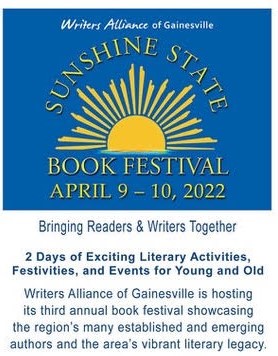
The last time I posted, in early January, I was looking forward to our third annual Sunshine State Book Festival at the end of the month. As penalty for diligence and hard work, I’d found myself chairman of the committee. My equally hardworking comrades were putting the finishing touches on the Festival. We’d rented the Oaks Mall in Gainesville for Saturday’s event. Nearly 100 authors, both local and from elsewhere, were registered. I was one of them, with a new book to offer. Five interesting speakers were scheduled for the next day at the Matheson History Museum.

Then Omicron. As infection rates skyrocketed, so did our anxiety. Authors began to drop out over concern for their health. We, too, questioned the advisability of holding a large indoor event during a wave in the pandemic. We hated to change our plans, but people’s safety was at stake.

So much uncertainty. How long would Omicron plague us? What if we change the date and there is another surge of the coronavirus? None of had a crystal ball, but we had no choice. For the second time, COVID disrupted our plans. We postponed the festival.

That meant changing the dates with the Mall and the Matheson. Fortunately both were available on the 9th and 10th of April.

If, in January, we were ready to launch the Festival in three weeks, three months should have us uber-prepared, right? Hold on. When you’re forced to punt, you can’t score until your next possession. If your opponent is worthy enough, it can take a good deal of time and effort to get to your next possession. That’s where we found ourselves.

We had been advertising for months. Promotional materials had been printed and distributed. Not only did the registered authors need to know of the change, the public and local media had to be informed. A lot of leg (or laptop) work. Besides correcting things, we kept finding stuff that should have been done earlier, plus a few things that just weren’t going to get done. Let’s hope they’re not critical.

There you have it, my long-winded excuse for failing to post in over three months. We are supposed to be using our social media to promote the Festival. Have you seen anything on mine? Oh, I was waiting until the last minute, to balance out those people (you know the type) who are prompt with everything.

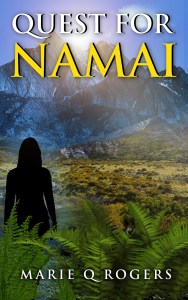
So, if you are anywhere within driving distance of Gainesville, Florida on the weekend of April 9th, there’s plenty of parking at the Oaks Mall. Pop in and visit the Sunshine State Book Festival. Look me up at table 47. I’ll have copies of Trials by Fire and my latest book Quest for Namai. I’ll also have bookmarks with the QR code to Season of the Dove, which is on Kindle Vella, but not available in book form yet.

On Sunday, don’t miss the speakers at the Matheson.

If you can’t come, check out my books anyway. You’ll be glad you did.

Fire

Read Full Post »

Over the past few days, my inbox has been filled with notices of new posts by fellow bloggers. Most recap the past year and list their intentions for the year to come. But where have I been?

They say the Road to Hell is paved with Good Intentions. If that’s so, anyone who hasn’t posted on their weblog since September must be on that very road! In my defense, I’ve been slammed with projects over the past year. It’s my own fault. I need to go back to middle school and take that “Just Say No” workshop.

I won’t bore you with the many organizations I volunteer for, only say that I’ve threatened to go back to work so I can get some time off. With a job, you work 8 to 5, weekends off, and you can call in sick. A volunteer position owns you body and soul and is no respecter of holidays or even wee hours of the night. My advice to new retirees is to watch out for that “V” word.

No more complaining–in my writing life, I have been productive. Season of the Dove, my book on Kindle Vella, is doing well. Quest for Namai, the sequel to my YA book, Trials by Fire, will come out this month if I can get KDP to cooperate with my uploads.  

Coming soon…

Another project I’ve been involved in has finally come to fruition. Back in August 2020, the history museum in Gainesville, Florida began collecting material from local residents on their pandemic experiences. Someone got the idea to involve local writers, i.e. the Writers Alliance of Gainesville, with which I am intimately involved. The idea was to compile stories and artwork into a book which would chronicle the lives of ordinary people in these unordinary times. It sounded like a good idea, so I jumped in feet first.

Wise people test the waters first, but in reality, these waters were untested. Most of my partners in crime are writers, but this was the first time we’d taken on a project like this. It proved to be a learning experience. In our innocence, we thought we would have the book put together by December and published by January, 2021. Nope.

However, we persevered. After the vaccines came out, we worried the pandemic would be over and forgotten before we released the book. Dream on. Setback after setback, over a year after we started, Local Lives in a Global Pandemic: Stories from North Central Florida finally saw the light of day!

I was both unprepared for and pleased by the attention we received in the community. It feels good to be appreciated. It feels even better to have this project behind me.

In the coming year, you will hear more from me. I haven’t stopped musing over curious things. In the meantime, click on the titles of the books and links will take you to them. Enjoy!

Read Full Post »

Older Posts »

Abandoned Southeast

Preserving the Past | A Photoblog of Hundreds of Abandoned, Historic, and Forgotten Places

Bonnie T. Ogle

Award Winning Childrens Author

filmmaven

A great WordPress.com site

The Tony Burgess Blog

The Home Of T-Bird From The Dork Web.

Wells Family Genealogy

The study of my Family Tree

Alien Resort

A Terrestrial Romance

douglasfelton.wordpress.com/

Compelling Young Adult fiction from author Doug Felton

Hidden River Arts

Dedicated to Serving the Unserved Artist

Green Life Blue Water

Where Eco Meets Life

Pattie Remembers

Sunsets and Buzzards, and Other Stories

koolkosherkitchen

Welcome to my Kool Kosher Kitchen where food is fun and fun is to create food!

The Life in My Years

An anthology of life

cookingforthetimechallenged

Fast, easy, all natural, healthy, kosher cooking

CarpeDiemEire

Travel Through Ireland and Europe

Yeah, Another Blogger

An Arts-Filled, Tasty And Sometimes-Loopy Jaunt Through Life